There are countless tools used in science, ranging from simple to complex. Here's a breakdown by category:
Observation & Data Collection
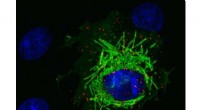
* Microscopes: Used to view objects too small to see with the naked eye. Types include light microscopes, electron microscopes, and scanning probe microscopes.
* Telescopes: Used to observe distant objects in space, such as stars, planets, and galaxies. Types include optical telescopes, radio telescopes, and space telescopes.
* Spectrometers: Analyze light to determine its composition and other properties. Useful for identifying elements and understanding the movement of stars and galaxies.
* Thermometers: Measure temperature.
* Scales/Balances: Measure mass or weight.
* Measuring Tapes/Rulers: Measure length or distance.
* Stopwatches: Measure time.
* Cameras: Capture images for documentation and analysis.
* Sensors: Detect and measure various physical quantities, like temperature, pressure, light intensity, pH, etc.
* Data Loggers: Collect data automatically over time.
Analysis & Experimentation
* Computers: Used for data analysis, modeling, and simulation.
* Software: Used for data analysis, statistical analysis, and visualization.
* Lab Equipment:
* Beakers & Flasks: For holding and mixing liquids.
* Graduated Cylinders: For precise measurement of liquids.
* Petri Dishes: For culturing bacteria and other microorganisms.
* Pipettes & Burettes: For precise liquid dispensing.
* Bunsen Burners: Used for heating substances.
* Test Tubes: For holding small samples of liquids or solids.
* Centrifuges: Separate materials based on density.
* Chemical Reagents: Chemicals used in experiments.
* Tools for Specific Disciplines: (e.g., microscopes and slides for biology, spectrophotometers for chemistry, telescopes for astronomy)
Communication & Collaboration
* Journals: Publish research findings.
* Conferences: Platforms for scientists to present research and collaborate.
* Internet & Social Media: Share research, ideas, and data.
Beyond the Basics
* Supercomputers: Used for complex simulations and data analysis.
* Particle Accelerators: Used to study the fundamental particles of matter.
* Satellites: Used for remote sensing, weather monitoring, and communication.
This is just a sampling of the tools used in science. The tools used will vary depending on the specific field of study and the research question being investigated.
Let me know if you'd like to know more about tools used in a specific scientific field!