Here's why:
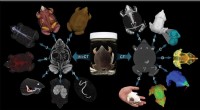
* Control Group: A control group is a standard of comparison that doesn't receive the treatment or manipulation being tested. It helps isolate the effect of the variable being studied.
* Experimental Group: The experimental group receives the treatment or manipulation being tested.
* Comparing Data: By comparing the data from the control and experimental groups, the scientist can determine if the treatment had a significant effect.
Here's how it works within the scientific method:
1. Observation: The scientist observes something in the natural world that prompts a question.
2. Hypothesis: The scientist proposes an explanation for the observation, called a hypothesis.
3. Experiment: The scientist designs an experiment to test the hypothesis, including a control and experimental group.
4. Data Collection: The scientist gathers data from both groups during the experiment.
5. Data Analysis: This is where the scientist compares the data from the control and experimental groups to see if there's a significant difference.
6. Conclusion: Based on the analysis, the scientist draws a conclusion about whether the hypothesis is supported or refuted.
Key Point: Comparing data between control and experimental groups is crucial for establishing cause-and-effect relationships and drawing valid conclusions from an experiment.