What we can observe with current technology:
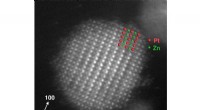
* Microscopes: Light microscopes can observe structures down to about 200 nanometers (nm). Electron microscopes can go down to a few nanometers.
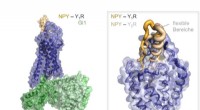
* Molecular biology: We can study individual molecules, including proteins and DNA, which are in the range of nanometers.
* Subatomic particles: We can even study the subatomic particles that make up cells using techniques like particle accelerators.
What we can't easily observe:
* The realm of quantum mechanics: While the behavior of individual atoms and molecules is governed by quantum mechanics, it's challenging to directly observe these quantum effects at the scale of an entire cell.
* Dimensions beyond the familiar three: String theory and other advanced physics models propose extra dimensions that are curled up very small. We have no experimental evidence for these extra dimensions, and they would be extremely difficult to study.
So, what's "outside observed range"?
It depends on your perspective:
* For microscopes: Anything smaller than a few nanometers is currently outside the range of what we can visualize directly.
* For molecular biology: We can study individual molecules, but we might not be able to observe their interactions and movements in real time within the complex environment of a cell.
* For theoretical physics: The existence of extra dimensions and quantum effects in the cell are still largely theoretical and very hard to study.
In summary: The "dimension outside observed range" is a constantly evolving concept. As technology improves, we are able to probe smaller and smaller scales within human cells. However, there are still many areas that remain beyond our direct observation, leaving room for continued scientific exploration.