Here's why:
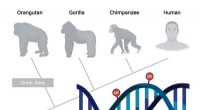
* Evolution is change in allele frequencies: Evolution is fundamentally about changes in the relative proportions of different gene variants (alleles) within a population over time.
* Genes are the units of heredity: Genes are the basic units of heredity, carrying the instructions for building and maintaining an organism. They are passed down from parents to offspring, and changes in these genes are what drive evolutionary change.
* Mutations are the source of new alleles: Mutations are random changes in the DNA sequence, and they are the ultimate source of new alleles. While some mutations can be harmful, others can be neutral or even beneficial, providing the raw material for evolution.
Examples of evolution at the gene level:
* Antibiotic resistance: Bacteria can evolve resistance to antibiotics through mutations in genes that control their susceptibility to the drug.
* Sickle cell anemia: This genetic disorder is caused by a mutation in a gene that produces hemoglobin. While harmful in its homozygous form, the sickle cell allele can be beneficial in areas where malaria is common, demonstrating how evolution can favor different alleles in different environments.
* Lactose tolerance: This trait evolved in human populations that relied heavily on dairy farming, illustrating how gene frequency changes can be driven by environmental pressures.
While evolution can occur at higher levels (like the species level), it ultimately boils down to changes in gene frequencies. Even seemingly "macro-evolutionary" events, like the formation of new species, are the result of a series of small changes at the gene level accumulating over time.