Here's a breakdown:
* DNA and RNA: DNA and RNA are made up of nucleotides, which are the building blocks of these molecules. Each nucleotide has a sugar, a phosphate group, and one of four nitrogenous bases: adenine (A), guanine (G), cytosine (C), or thymine (T) in DNA, or uracil (U) in RNA.
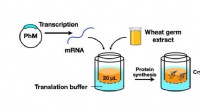
* Codons: Three consecutive nucleotides on a messenger RNA (mRNA) molecule form a codon. Each codon specifies a particular amino acid.
* Amino Acids: Amino acids are the building blocks of proteins. There are 20 different amino acids commonly found in proteins.
* Genetic Code: The relationship between codons and amino acids is known as the genetic code. This code is nearly universal across all living organisms, meaning that the same codons usually code for the same amino acids in bacteria, plants, animals, and even viruses.
Example:
The codon "AUG" codes for the amino acid methionine (Met).
Key Points:
* There are 64 possible codons (4 bases x 4 bases x 4 bases = 64).
* 61 codons code for the 20 amino acids.
* Three codons are "stop" codons, which signal the end of protein synthesis.
* The genetic code is degenerate, meaning that multiple codons can code for the same amino acid.
Let me know if you'd like to know more about the genetic code or protein synthesis!