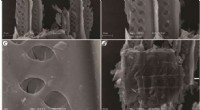
1. Visual Observation and Image Capture:
* Magnification: Microscopes use lenses to magnify objects, allowing us to see details that are otherwise invisible. This magnification can range from a few times to hundreds of thousands of times the object's actual size.
* Resolution: Microscopes also provide high resolution, allowing us to distinguish between closely spaced objects. This is crucial for seeing fine details and structures within cells or other small objects.
* Image Capture: Modern microscopes can capture images of the magnified objects, allowing for further analysis, documentation, and sharing of the observations.
2. Specific Techniques for Different Information:
Microscopes are used in various ways to gather specific information, depending on the type of microscope and the object being studied. Here are some examples:
* Light Microscopy: This common type uses visible light to illuminate the object. Different types of light microscopy, such as brightfield, darkfield, phase-contrast, and fluorescence microscopy, provide different information based on the way they interact with light.
* Electron Microscopy: This type uses a beam of electrons to illuminate the object, providing much higher resolution than light microscopy. It's used to study the ultrastructure of cells, viruses, and other very small objects.
* Scanning Probe Microscopy (SPM): This technique uses a sharp probe to scan the surface of an object, providing information about its topography and other properties.
* Confocal Microscopy: This technique uses a laser to illuminate a specific plane within a thick specimen, allowing for the creation of 3D images.
* Microscopy with Specific Stains and Dyes: Certain stains and dyes are used to highlight specific features of cells or tissues. These dyes selectively bind to certain molecules within the cells, allowing scientists to study the distribution and localization of these molecules.
3. Applications in Various Fields:
Microscopes are used in a wide range of fields, including:
* Biology: Studying cells, tissues, microorganisms, and other biological structures
* Medicine: Diagnosing diseases, examining tissue samples, and understanding the mechanisms of disease
* Materials Science: Studying the properties of materials at the nanoscale
* Forensic Science: Analyzing evidence from crime scenes
* Industry: Quality control and research in various industries
In summary, microscopes are essential tools for gathering detailed information about objects that are too small to be seen with the naked eye. By magnifying and illuminating objects, they provide valuable insights into their structure, composition, and behavior.