Tools for Testing a Hypothesis:
* Experimental Design: This involves carefully planning the experiment to ensure it is controlled and reliable. This might include identifying variables, determining sample size, and setting up control groups.
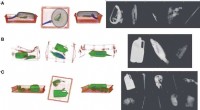
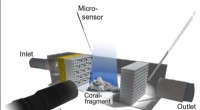
* Equipment: This can range from simple tools like beakers and thermometers to complex machines like microscopes, spectrometers, or specialized imaging equipment. The specific equipment needed depends on the type of experiment being conducted.
* Technology: Computers, software, and data analysis programs play an increasingly crucial role in scientific research. They help collect, analyze, and interpret data, as well as simulate experiments.
* Models: Scientists may use physical models, computer simulations, or even mathematical models to represent real-world phenomena and help them understand complex processes.
Tools for Collecting Data:
* Observations: Scientists use their senses and tools like cameras, microscopes, and telescopes to record observations about the experiment. These observations can be qualitative (descriptive) or quantitative (numerical).
* Measurements: Scientists use various tools to measure variables such as temperature, mass, volume, length, time, etc. The precision of the measurement depends on the chosen tool.
* Surveys and Questionnaires: These are useful for collecting data on opinions, beliefs, and behaviors.
* Sampling: This technique involves selecting a representative subset of the population to study, which can be used to draw inferences about the whole population.
Other Important Tools:
* Scientific Literature: Scientists rely heavily on existing knowledge and research. They use journals, books, and online databases to gather information about previous studies and relevant theories.
* Collaboration: Scientists often work together in teams, sharing ideas, resources, and expertise to conduct research and analyze data.
* Critical Thinking and Problem Solving: Scientists need to think critically about their data, analyze it logically, and interpret results within the context of their hypothesis and existing knowledge.
Ultimately, the specific tools and techniques used by scientists will depend on the nature of the experiment and the questions they are trying to answer. But the tools listed above provide a general overview of the resources that scientists use to conduct research and test their hypotheses.