Here's a breakdown:
Types of Constant Factors:
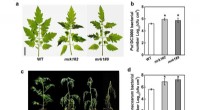
* Controlled Variables: These are deliberately kept constant by the experimenter to isolate the effect of the independent variable on the dependent variable. For example, in an experiment testing the effect of fertilizer on plant growth, the amount of water, sunlight, and soil type would be controlled variables.
* Natural Constants: These are fundamental physical constants that are believed to be unchanging throughout the universe. Examples include:
* Speed of light (c): Approximately 299,792,458 meters per second.
* Planck constant (h): A fundamental constant in quantum mechanics, relating the energy of a photon to its frequency.
* Gravitational constant (G): A constant that determines the strength of the gravitational force between objects with mass.
Importance of Constant Factors:
* Accurate Results: By controlling variables, scientists can isolate the effect of the independent variable, leading to more reliable and accurate conclusions.
* Reproducibility: Experiments that rely on constant factors are more likely to be reproducible by other scientists, enhancing the credibility of the findings.
* Understanding Cause and Effect: Constant factors allow scientists to determine the causal relationship between variables, helping them understand the underlying mechanisms at play.
Examples of Constant Factors in Different Fields:
* Biology: In a study on the growth rate of bacteria, the temperature, pH, and nutrient availability would be constant factors.
* Chemistry: In a reaction experiment, the volume of the reactants and the pressure would be kept constant to ensure a fair comparison.
* Physics: When studying the motion of objects, the gravitational force acting on them is a constant factor.
Key Points:
* Constant factors are essential for scientific inquiry.
* They help isolate variables and ensure accurate and reliable results.
* Identifying and controlling constant factors is crucial for scientific experiments and observations.
Remember, constant factors are not always easy to identify or control. This can be a challenge, but it is crucial to strive for as much control as possible in order to gain a deeper understanding of the natural world.