Factors to consider when choosing a biome:
* Accessibility: Can you easily access the biome for research or observation? For example, a forest near your home might be easier to study than a rainforest in the Amazon.
* Resources: Do you have the tools and equipment needed for your project? Some biomes require more specialized equipment than others.
* Complexity: Some biomes are simpler to study than others. For example, a desert might have fewer species and interactions than a tropical rainforest.
* Your interests: What are you passionate about? What kind of questions do you want to answer?
Here are some examples of biomes that might be relatively easy to study, depending on your location and resources:
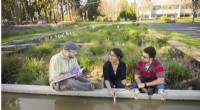
* Local park or backyard: You can study the plants, animals, and soil in your own backyard or local park. This allows for easy access and observation.
* Urban ecosystem: You can study the interactions of plants, animals, and humans in an urban environment.
* Local pond or stream: You can study the aquatic life, water quality, and the effects of pollution on the ecosystem.
* Forest: You can study the trees, plants, animals, and soil in a forest. You could explore topics like decomposition, nutrient cycling, or the impact of deforestation.
* Desert: You can study the adaptations of plants and animals to survive in harsh conditions, the impact of drought, or the role of wind erosion in shaping the landscape.
Tips for choosing a project:
* Start small: Choose a focused question or problem to investigate.
* Use readily available resources: Look for data that is publicly available online or from local organizations.
* Get creative: Think outside the box and come up with unique ways to study your biome.
* Talk to experts: Reach out to local scientists, teachers, or park rangers for advice and guidance.
Ultimately, the "easiest" biome is the one that you're most interested in and that you have the resources to study effectively.