Here's a breakdown of key aspects:
Characteristics:
* Empirical: It's derived from real-world measurements, not theoretical principles.
* Data-driven: The function is fit to the observed data using statistical methods.
* Descriptive: It provides a mathematical representation of the observed growth pattern.
* Predictive: It can be used to estimate future growth based on the established trend.
Common Types:
* Exponential growth: Represents rapid growth at a constant rate.
* Logistic growth: Describes growth that slows down as it approaches a carrying capacity.
* Gompertz growth: Similar to logistic, but with a slightly different shape.
* Power law growth: Exhibits a power-law relationship between growth and time.
Steps in Development:
1. Collect data: Gather measurements of the system's growth over time.
2. Choose a model: Select an appropriate growth function based on the data's characteristics.
3. Fit the model: Use statistical methods to determine the best parameters for the chosen function.
4. Evaluate the fit: Assess how well the function predicts the observed data.
5. Use for prediction: Apply the fitted function to estimate future growth.
Examples:
* Population growth: Modeling the growth of a bacterial culture in a lab.
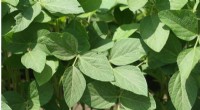
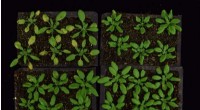
* Plant growth: Describing the increase in height or biomass of a plant over time.
* Economic growth: Analyzing the growth of a company's revenue or GDP.
Limitations:
* Limited to the observed data: The function may not accurately represent growth outside the range of the data.
* Assumptions: The choice of growth function implies certain assumptions about the underlying mechanisms.
* Uncertainty: Experimental data often has noise and variability, introducing uncertainty in the fitted function.
In summary, an experimental growth function is a valuable tool for understanding and predicting the growth of complex systems based on empirical evidence. It provides a mathematical framework for analyzing and interpreting observed trends, but it's important to be aware of its limitations and the assumptions involved.