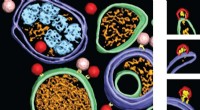
* Chloroplasts: These are the powerhouses of the leaf cell. They contain chlorophyll, the green pigment that captures sunlight. The chloroplasts have a complex internal structure that allows for efficient light absorption and conversion into chemical energy.
* Large Surface Area: Leaf cells have a large surface area, thanks to their flattened shape and the presence of pores called stomata. This maximizes the amount of sunlight that can be captured and allows for efficient gas exchange (taking in carbon dioxide, releasing oxygen).
* Efficient Water Transport: Leaf cells are connected to a network of vascular tissue (xylem and phloem) that efficiently transports water (carrying nutrients) and sugars produced during photosynthesis. This ensures a constant supply of water and nutrients to the leaf cells.
* Protective Layers: Leaf cells are surrounded by a cell wall that provides structural support and protection. The outer layer, called the cuticle, helps to prevent water loss and protect from damage.
* Specialization: Leaf cells are specialized for photosynthesis, unlike other cells in the plant. They lack certain structures and functions present in root cells or stem cells, optimizing them for their specific role.
In summary, a leaf cell is good at its job because it's a highly specialized, efficient, and well-equipped factory for converting sunlight into energy. This makes it fundamental for the survival of the plant and the entire ecosystem.