Here's a breakdown of their key roles:
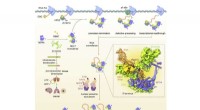
* Read the mRNA code: Ribosomes bind to mRNA and move along it, reading the genetic code (codons) that specifies the sequence of amino acids for a particular protein.
* Recruit and bind tRNA: Ribosomes recruit transfer RNA (tRNA) molecules that carry specific amino acids. Each tRNA has an anticodon that matches the codon on the mRNA.
* Join amino acids: As the ribosome moves along the mRNA, it brings together the amino acids carried by the tRNAs in the correct order, forming a polypeptide chain.
* Release the polypeptide: Once the ribosome reaches the end of the mRNA, it releases the completed polypeptide chain, which can then fold into a functional protein.
In essence, ribosomes act as the molecular factories within cells, using the blueprint provided by mRNA to create the diverse array of proteins essential for all cellular functions.