Here's a breakdown of different types of variables:
* Independent Variable (IV): This is the factor that the experimenter manipulates or changes to see its effect. It's the "cause" in a cause-and-effect relationship.
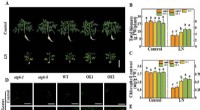
* Example: In an experiment testing the effect of fertilizer on plant growth, the independent variable is the amount of fertilizer.
* Dependent Variable (DV): This is the factor that is measured or observed in response to changes in the independent variable. It's the "effect" in a cause-and-effect relationship.
* Example: In the same experiment, the dependent variable is the height of the plant.
* Controlled Variables: These are factors that are kept constant throughout the experiment to ensure that only the independent variable is affecting the dependent variable.
* Example: In the fertilizer experiment, controlled variables might include the amount of sunlight, water, and type of soil.
Why are variables important?
* Isolate cause and effect: By changing only the independent variable, scientists can observe how it affects the dependent variable.
* Control for extraneous factors: Controlled variables help to ensure that any changes in the dependent variable are directly related to the independent variable, and not due to other factors.
* Replicate results: By controlling variables, scientists can replicate their experiments and confirm their findings.
Understanding variables is crucial for designing and interpreting scientific experiments. They help us understand the world around us by revealing the relationships between different factors.