Biology/Medicine:
* Abdomen: The region of the body between the thorax (chest) and the pelvis.
* Abiotic: Non-living components of an ecosystem, such as water, air, and soil.
* Ablation: The surgical removal of tissue or an organ.
* Abnormal: Deviating from the normal or typical.
* Abortion: The termination of a pregnancy before the fetus is viable.
* Absorption: The process by which substances are taken into the body.
* Abundance: The relative number or frequency of a particular species or organism in an ecosystem.
* Abeyance: A state of temporary inactivity or suspension.
* Abiotic Factor: Non-living parts of the environment that affect living organisms (e.g., temperature, sunlight, water).
* Abiogenesis: The origin of life from non-living matter.
* Abiotic Stress: Environmental conditions that are unfavorable for living organisms (e.g., drought, heat stress).
Chemistry:
* Ab initio: A type of calculation in quantum chemistry that uses first principles to predict the properties of molecules.
* Abscisic Acid: A plant hormone that regulates growth and development.
* Absolute Configuration: The spatial arrangement of atoms in a molecule.
* Absolute Zero: The theoretical temperature at which all molecular motion ceases.
* Absorption Spectroscopy: A technique used to identify and quantify substances by their ability to absorb light.
Other Sciences:
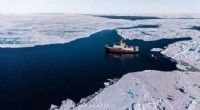
* Ablation Zone: The area of a glacier where more ice melts than accumulates.
* Aberration: A distortion or deviation from the expected or normal.
* Abiotic Decay: The breakdown of non-living matter, such as rocks or minerals.
* Abrupt Climate Change: A rapid shift in climate patterns.
This is not an exhaustive list, but it covers a variety of scientific disciplines. Remember to always check the context of the word to determine its specific meaning!