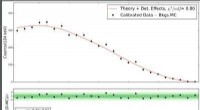
Here's a breakdown of what "results" mean in science:
* Data Collection: Results are the raw data collected during experiments or observations. This can include measurements, observations, images, or any other form of information.
* Analysis: The collected data is analyzed using statistical methods or other appropriate techniques to identify patterns, trends, and relationships.
* Interpretation: The analyzed data is interpreted to draw conclusions about the phenomenon under investigation.
* Conclusions: The conclusions based on the results either support or refute the initial hypothesis, leading to further research or the development of new hypotheses.
Here are some key features of scientific results:
* Empirical: They are based on actual observations and measurements, not on opinions or beliefs.
* Objective: They aim to be free from personal bias and interpretations.
* Replicable: Other scientists should be able to obtain similar results by conducting the same experiment or observation.
* Communicated: Results are often communicated through scientific publications, presentations, or conferences.
Examples of results in science:
* In a study on the effects of fertilizer on plant growth: The results might be the average height of plants in different fertilizer groups.
* In an experiment on the effectiveness of a new drug: The results might be the percentage of patients who experienced improvement in their condition.
* In an astronomical observation: The results might be images of a distant galaxy or data on the composition of a star.
Results are the foundation of scientific knowledge. By carefully collecting, analyzing, and interpreting results, scientists can advance our understanding of the world around us.