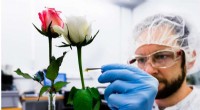
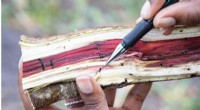
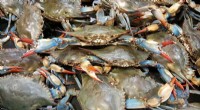
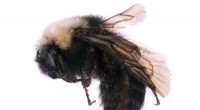
* Observations form the foundation of scientific inquiry: Scientists observe the natural world to identify patterns, phenomena, and questions that need to be answered.
* Types of Observations: These observations can be:
* Qualitative: Describing what is seen, heard, smelled, tasted, or felt (e.g., "The sky is blue," "The plant is wilting").
* Quantitative: Measuring and quantifying observations using instruments (e.g., "The temperature is 25 degrees Celsius," "The plant grew 5 centimeters").
* Examples across scientific fields:
* Biology: Observing animal behavior in their natural habitat, examining cells under a microscope.
* Chemistry: Observing the color change during a chemical reaction, measuring the mass of a substance.
* Physics: Observing the trajectory of a ball thrown in the air, measuring the speed of light.
* Astronomy: Observing distant stars and galaxies through telescopes, analyzing light spectra.
* Geology: Observing rock formations, examining fossils, studying the movement of tectonic plates.
Here's a breakdown of how observations are used in different stages of scientific investigation:
* Formulating a hypothesis: Observations can lead to the formation of questions and potential explanations (hypotheses).
* Designing an experiment: Observations help determine the variables to be manipulated and measured in an experiment.
* Collecting data: Observations are the primary way of collecting data during an experiment.
* Analyzing data: Observations are used to interpret data and draw conclusions.
* Drawing conclusions: Observations help scientists determine whether their hypothesis is supported or refuted.
In summary, observations are essential for all stages of scientific investigation, from the initial spark of curiosity to the final interpretation of results.