1. To simplify complex phenomena:
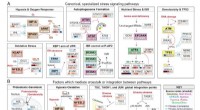
* The world is incredibly complex, with numerous interacting components. Defining systems allows scientists to focus on specific sets of elements and their relationships, simplifying analysis and making it easier to understand their behavior.
* By isolating specific parts, scientists can study them in detail and identify their individual contributions to the larger system.
2. To identify cause and effect relationships:
* Systems can help scientists analyze how changes in one part of a system affect other parts. This understanding is crucial for predicting future outcomes and designing interventions.
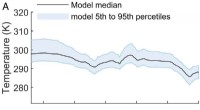
* For example, in a climate system, scientists study the interactions between the atmosphere, oceans, and land to understand how changes in greenhouse gas emissions affect temperature, precipitation, and other climatic variables.
3. To model and predict behavior:
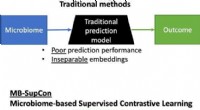
* By defining a system and its key components, scientists can create mathematical models that simulate its behavior under different conditions.
* These models can then be used to predict future outcomes, test hypotheses, and design solutions to problems.
4. To understand emergent properties:
* Some systems exhibit emergent properties, meaning that the whole system has characteristics that are not present in its individual parts. Defining systems allows scientists to study these emergent properties and understand how they arise from the interactions between components.
* For example, a flock of birds exhibits emergent properties like collective movement and decision-making, which cannot be observed in individual birds.
5. To communicate findings effectively:
* Defining systems provides a shared vocabulary and framework for scientists to communicate their research findings.
* This shared understanding facilitates collaboration, allows for the replication of experiments, and ensures that research findings are clear and consistent.
In summary, defining systems is a fundamental tool for scientists to analyze, understand, model, and predict the behavior of complex phenomena. It allows for the simplification of complex processes, identification of cause-and-effect relationships, prediction of outcomes, and the study of emergent properties.