1. Empiricism: Observation and Experimentation
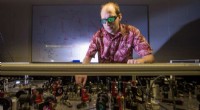
* Foundation: Science is fundamentally about observing the natural world and collecting data through experiments.
* Key Features:
* Systematic Observation: Observations are made in a structured, controlled, and repeatable way.
* Measurement: Phenomena are quantified using precise instruments and units.
* Experimentation: Controlled experiments are designed to test hypotheses and isolate variables.
2. Testability and Falsifiability:
* Central Idea: Scientific claims must be testable and potentially falsifiable. This means there must be a way to prove or disprove them through observation and experimentation.
* Importance:
* Open to Revision: This allows science to self-correct and evolve as new evidence emerges.
* Distinguishes Science from Non-Science: Untestable or unfalsifiable claims are outside the realm of scientific inquiry.
3. Objectivity and Peer Review:
* Objectivity: Scientists strive for objectivity in their observations and interpretations, minimizing personal biases.
* Peer Review: Scientific findings are scrutinized by other experts in the field before publication. This rigorous review process helps ensure the validity and quality of research.
4. Hypotheses and Theories:
* Hypotheses: Proposed explanations for observed phenomena. They are testable and can be supported or refuted by evidence.
* Theories: Well-substantiated explanations of natural phenomena that are supported by a large body of evidence. They are constantly refined and updated.
5. Logical Reasoning and Explanation:
* Deductive Reasoning: Starts with general principles and applies them to specific cases.
* Inductive Reasoning: Draws general conclusions from specific observations.
* Explanations: Scientific explanations are based on logical reasoning and aim to provide coherent and consistent interpretations of observations.
6. Scientific Method:
* A Framework: The scientific method provides a structured approach to investigating phenomena. It involves:
* Observation
* Hypothesis Formation
* Experimentation
* Data Analysis
* Conclusion
What's NOT Scientific?
* Subjective Opinions and Beliefs: Science deals with objective reality, not personal beliefs or opinions.
* Unfalsifiable Claims: Statements that cannot be tested or disproven are not scientific.
* Anecdotal Evidence: Personal experiences or isolated examples are not sufficient to establish scientific claims.
* Pseudoscience: Practices or beliefs that claim to be scientific but lack empirical evidence or adhere to scientific principles.
In essence, science is a rigorous, evidence-based, and constantly evolving approach to understanding the natural world. It relies on observation, experimentation, and logical reasoning to generate testable explanations and build a coherent understanding of the universe.