Here's how it works:
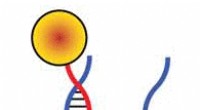
* DNA: Genes are segments of DNA, which contains the genetic instructions for building and maintaining an organism.
* Transcription: The DNA sequence of a gene is copied into a messenger RNA (mRNA) molecule.
* Translation: The mRNA molecule travels to ribosomes, where it is translated into a chain of amino acids.
* Protein: The amino acid chain folds into a specific 3D structure, forming a protein.
Proteins are the workhorses of the cell, carrying out a wide variety of functions:
* Enzymes: Catalyze biochemical reactions.
* Structural components: Provide shape and support to cells and tissues.
* Hormones: Act as chemical messengers.
* Antibodies: Help the immune system fight off infections.
* Transport proteins: Move molecules across cell membranes.
So, while genes are made of DNA, they ultimately direct the production of proteins, which are the molecules that perform most of the essential functions in living organisms.