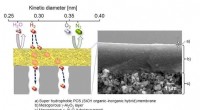
Reverse osmosis (RO) is a water purification technology that uses pressure to force water molecules through a semipermeable membrane, leaving behind impurities like salts, heavy metals, and contaminants. It's like a selective filter that only allows water molecules to pass through, effectively cleaning the water.
Here's how it works:
1. Feedwater enters the system: The water you want to purify goes into the RO system.
2. Pressure is applied: A pump increases the pressure of the feedwater to overcome the natural osmotic pressure.
3. Water passes through the membrane: The pressurized water is forced against a semipermeable membrane, which has tiny pores that only allow water molecules to pass through.
4. Impurities are rejected: Larger molecules, like salts, minerals, and contaminants, are too big to pass through the membrane and are left behind in the concentrate stream.
5. Clean water is produced: The purified water that passes through the membrane is collected as the permeate stream.
Why is reverse osmosis effective?
* Highly effective filtration: RO membranes can remove a wide range of contaminants, including dissolved salts, heavy metals, bacteria, viruses, and pesticides.
* Energy-efficient: RO systems can be more energy-efficient than other filtration methods, especially when used with a recovery system to recycle the concentrate stream.
* Versatile: RO systems can be used for various applications, including drinking water purification, industrial water treatment, and desalination.
Key Components of an RO System:
* Feed Pump: Increases the pressure of the feedwater.
* Pre-filter: Removes large particles and sediment before the water reaches the membrane.
* Reverse Osmosis Membrane: The heart of the system, where water molecules are separated from impurities.
* Pressure Vessel: Holds the membrane.
* Post-filter: Removes any remaining impurities from the purified water.
* Recovery System: Optionally recycles the concentrate stream to save water and energy.
Benefits of Using Reverse Osmosis:
* Produces clean, safe drinking water.
* Removes a wide range of contaminants.
* Can be used for various water purification applications.
* Relatively energy-efficient.
Drawbacks of Using Reverse Osmosis:
* Can be expensive to install and maintain.
* Produces a concentrate stream that needs to be disposed of.
* Can remove some beneficial minerals from water.
* Requires regular maintenance to ensure proper function.
Overall, reverse osmosis is a powerful and versatile technology that offers a high level of water purification. However, it's crucial to consider the costs, benefits, and potential drawbacks before investing in an RO system.