Here's why:
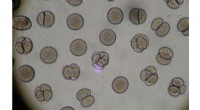
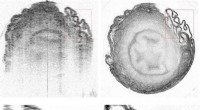
* Structure: HIV has a spherical shape, with a lipid envelope surrounding a core containing genetic material (RNA). This core is further encased by a protein capsid.
* Appearance: Under an electron microscope, HIV particles appear as round or slightly oval structures.
While there are many viruses that have spherical or near-spherical shapes (like influenza, poliovirus, and adenoviruses), HIV is a well-known example that exhibits this characteristic.