Light Microscopes (Optical Microscopes)
* Bright-field Microscope: The most basic and common type. It uses visible light to illuminate the sample, producing a bright image against a dark background.
* Dark-field Microscope: Uses a special condenser to illuminate the sample from the sides, resulting in a bright image against a dark background. Ideal for viewing unstained specimens or transparent objects.
* Phase-contrast Microscope: Uses the differences in refractive index between the specimen and its surroundings to produce contrast. Excellent for viewing living cells and unstained specimens.
* Differential Interference Contrast (DIC) Microscope: Similar to phase-contrast but produces a more 3D-like image with higher resolution.
* Fluorescence Microscope: Uses fluorescent dyes to stain the specimen, which then emit light of a different wavelength when illuminated with specific wavelengths of light. Powerful for visualizing specific molecules and structures within cells.
* Confocal Microscope: Uses a laser beam to illuminate a single point in the specimen, and then scans the entire sample to build up a 3D image. Provides high resolution and the ability to view thick specimens.
Electron Microscopes
* Transmission Electron Microscope (TEM): Uses a beam of electrons to illuminate the sample. Electrons pass through the sample, creating an image on a screen. Provides very high resolution, allowing visualization of internal structures of cells and molecules.
* Scanning Electron Microscope (SEM): Uses a beam of electrons to scan the surface of the sample. Electrons that are scattered back from the surface are detected, creating an image of the surface. Provides detailed 3D images of the sample's surface.
Other Types of Microscopes
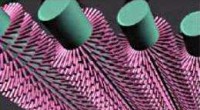
* Scanning Probe Microscopes (SPM): Use a very sharp probe to scan the surface of the sample. This allows for extremely high resolution, even at the atomic level.
* Atomic Force Microscope (AFM): A type of SPM that uses a tiny probe with a sharp tip to scan the surface of a sample. It measures the forces between the tip and the sample to produce a detailed image of the surface.
* Near-field Scanning Optical Microscope (NSOM): Combines optical microscopy with scanning probe microscopy, allowing for higher resolution than traditional light microscopes.
The type of microscope best suited for a particular application depends on the size and nature of the specimen, the level of detail required, and the specific information desired.