1. Simplification and Understanding:
* Complex Systems: The world is incredibly complex. Models allow scientists to focus on specific aspects of a system, simplifying it to make it easier to understand and analyze.
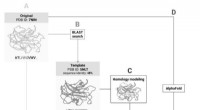
* Visual Representation: Models can be visual, such as diagrams, 3D representations, or physical prototypes, helping us to visualize and grasp concepts that might be abstract or too small/large to directly observe.
2. Prediction and Experimentation:
* Predicting Outcomes: Models help scientists make predictions about how a system will behave under different conditions.
* Testing Hypotheses: Models allow scientists to test hypotheses in a controlled environment before conducting real-world experiments, which can be expensive, time-consuming, or even impossible.
3. Communication and Collaboration:
* Clearer Explanation: Models provide a common language for scientists to communicate their findings and ideas to others, even if they are working in different fields.
* Shared Understanding: Models foster collaboration by enabling scientists to work on the same problem using a shared framework.
4. Exploration and Design:
* Exploring Possibilities: Models allow scientists to explore different scenarios and solutions before committing to a real-world implementation.
* Designing Solutions: Models are essential for designing new technologies, products, and processes.
Examples:
* Climate Models: Used to understand and predict the effects of climate change.
* Economic Models: Used to predict the behavior of financial markets and economies.
* Biological Models: Used to understand the mechanisms of life, such as DNA replication and protein synthesis.
* Engineering Models: Used to design bridges, buildings, airplanes, and other structures.
Types of Models:
* Physical Models: Representations made from tangible materials (e.g., a scale model of a building).
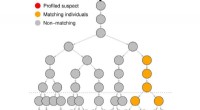
* Conceptual Models: Simplified representations of a system using abstract concepts (e.g., a flow chart).
* Mathematical Models: Representations using mathematical equations and relationships (e.g., an equation for predicting population growth).
* Computer Simulations: Computer-based models that mimic real-world systems (e.g., a flight simulator).
In short, models are essential tools for scientists to understand the world around us, predict future outcomes, and design solutions to complex problems.