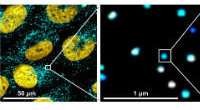
* Microscopic nature: Archaea and Bacteria are single-celled organisms, invisible to the naked eye. Microscopes were not advanced enough in Linnaeus' time to observe and differentiate these tiny life forms.
* Similarities: Bacteria and Archaea share some superficial similarities in their morphology (shape and structure). Linnaeus grouped all single-celled organisms he observed under the kingdom "Animalcule" (later renamed "Monera").
* Limited understanding of biochemistry: The fundamental differences between Archaea and Bacteria, particularly their biochemistry and genetics, weren't discovered until much later. The distinct evolutionary paths and unique biochemical features of Archaea weren't known to Linnaeus.
In summary: Linnaeus' system was based on the macroscopic world he could observe directly. The discovery and understanding of microorganisms like Archaea and Bacteria were only possible with the development of advanced microscopes and biochemical techniques, long after Linnaeus' time.