Reasons for Collaboration:
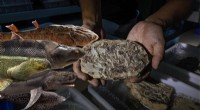
* Expanding Knowledge: Fossils are like time capsules, providing invaluable insights into past life and environments. Sharing them allows scientists from various fields (paleontology, geology, biology, etc.) to study them and build a more complete understanding of the past.
* Data Sharing and Research: Donating a fossil allows scientists to:
* Access and Analyze: Researchers from different institutions can study the fossil, ensuring its data is used to its fullest potential.
* Comparative Studies: Comparing this fossil to others in the collection can reveal patterns, evolutionary relationships, or geographic distribution of ancient life.
* Preservation and Accessibility: By placing the fossil in a curated collection, it is protected from damage, loss, or misuse. This ensures the fossil is available for future generations of researchers.
* Collaboration on Research: The act of donating encourages collaboration. The donor might be involved in research projects using the fossil, or the collection might offer opportunities for joint publications or research partnerships.
Think of it like this: Imagine a scientist who discovers a rare dinosaur bone. By donating it to a museum's collection, the scientist isn't just giving up the fossil. They are enabling a community of scientists to:
* Learn more about dinosaurs: By studying the bone alongside other fossils, they can better understand dinosaur anatomy, evolution, and even their extinction.
* Share findings with the world: Publications and exhibits based on the fossil can educate the public and inspire future generations of scientists.
In essence, donating a treasured fossil is a selfless act that benefits the entire scientific community and advances knowledge for the greater good.