Here's how it happened:
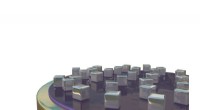
* 1665: Hooke, an English scientist, was examining a thin slice of cork under a microscope. He observed small, box-like compartments that reminded him of the cells of a monastery. He called these compartments "cells."
* Early cell theory: While Hooke's discovery was groundbreaking, he didn't fully grasp the significance of cells as the fundamental unit of life. His observations were limited to dead cells, and he didn't realize that these "cells" were present in all living things.
* Later developments: Over time, other scientists like Antonie van Leeuwenhoek, Matthias Schleiden, and Theodor Schwann built upon Hooke's work. They observed living cells and formulated the cell theory:
* All living things are made up of cells.
* Cells are the basic unit of structure and function in living things.
* All cells come from pre-existing cells.
Therefore, Robert Hooke's observations laid the groundwork for the cell theory, which is now a fundamental principle of biology.