1. Specialization and Division of Labor:
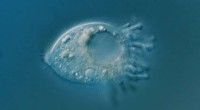
* Unicellular organisms: They perform all life functions within a single cell. This limits their complexity and efficiency.
* Multicellular organisms: They have cells specialized for specific tasks (e.g., muscle cells for movement, nerve cells for communication, digestive cells for nutrient processing). This division of labor allows for more efficient and complex processes.
2. Size and Surface Area to Volume Ratio:
* Unicellular organisms: They have a high surface area to volume ratio, which allows for efficient nutrient uptake and waste removal. However, this limits their potential size.
* Multicellular organisms: They have a lower surface area to volume ratio, allowing them to grow larger. Specialized transport systems (e.g., circulatory system) and internal environments (e.g., digestive tract) compensate for the reduced surface area.
3. Complexity and Adaptation:
* Unicellular organisms: They are limited in their ability to adapt to changing environments and develop complex structures.
* Multicellular organisms: They can evolve complex organ systems (e.g., nervous system, respiratory system, reproductive system) for specialized functions, increasing their survival and adaptability.
4. Enhanced Movement and Locomotion:
* Unicellular organisms: Their movement is often limited to flagella or cilia.
* Multicellular organisms: They can develop complex musculoskeletal systems that allow for coordinated and efficient movement, enabling them to explore wider environments.
5. Resilience and Regeneration:
* Unicellular organisms: A single cell damage can be fatal.
* Multicellular organisms: They can lose individual cells without compromising their overall function. Some can even regenerate lost parts, increasing their survival chances.
Examples:
* A human body with specialized cells for digestion, breathing, and circulation is much more efficient in obtaining energy and eliminating waste than a single amoeba.
* A plant with roots, stems, and leaves can grow taller, access more sunlight, and withstand harsh weather conditions better than a single algae.
In summary, multicellular organisms are more efficient due to their:
* Specialization: Cells are optimized for specific functions.
* Division of Labor: Allows for more complex and efficient processes.
* Increased size and surface area: Facilitates growth and adaptation.
* Complex organ systems: Enable specialized functions and adaptation.
* Enhanced movement and locomotion: Expand access to resources and environments.
* Resilience and regeneration: Increased survival chances.