Here's the thing: All organelles are technically embedded within the cytoplasm. Cytoplasm is the gel-like substance that fills the cell and contains all the organelles.
However, there are some organelles that are associated with or bound to other structures within the cell, giving the impression they are not "floating" freely in the cytoplasm. Here are some examples:
* Nucleus: While the nucleus is technically within the cytoplasm, it has its own membrane, the nuclear envelope, which separates it from the rest of the cytoplasm.
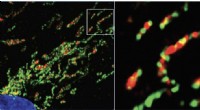
* Mitochondria: These are often found near areas of high energy demand within the cell, like the cytoskeleton or the cell membrane.
* Ribosomes: These can be found attached to the endoplasmic reticulum (ER), or floating freely in the cytoplasm.
* Endoplasmic Reticulum (ER): The ER is a network of membranes that extends throughout the cytoplasm, creating compartments and channels.
* Golgi apparatus: This organelle is also closely associated with the ER and the cell membrane.
So, while no organelles are truly *outside* of the cytoplasm, they can have different relationships to the cytoplasm and other cellular structures.