Here's a breakdown:
Structure:
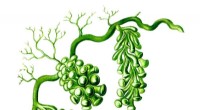
* Thyroid follicles: Thyroid vesicles are clustered together to form larger structures called thyroid follicles.
* Follicular cells: These cells line the outer wall of the vesicles and are responsible for synthesizing and secreting thyroid hormones.
* Colloid: The inside of the vesicles is filled with a gelatinous substance called colloid, which is a rich source of thyroglobulin, a protein that acts as a precursor for thyroid hormones.
Function:
1. Thyroid hormone synthesis:
* Follicular cells produce and secrete thyroglobulin into the colloid.
* Iodine is actively transported from the blood into the follicular cells and then into the colloid.
* Inside the colloid, iodine is attached to thyroglobulin, forming thyroid hormones (thyroxine (T4) and triiodothyronine (T3)).
2. Thyroid hormone storage:
* Thyroid vesicles store large amounts of thyroid hormones within the colloid.
3. Thyroid hormone release:
* When needed, follicular cells take up thyroglobulin from the colloid and break it down into T3 and T4.
* These hormones are then released into the bloodstream and transported to target cells throughout the body.
Significance:
Thyroid vesicles play a crucial role in regulating metabolism, growth, and development. Proper function of these vesicles is essential for overall health. Disruptions in thyroid vesicle function can lead to conditions like hypothyroidism and hyperthyroidism.