Amoebas are single-celled organisms that feed by engulfing food through a process called phagocytosis. Here's a breakdown of how they do it, along with a diagram:
1. Detection:
* An amoeba uses its pseudopodia (false feet) to sense its surroundings and detect potential food sources. These pseudopodia are temporary extensions of the cell membrane that help in movement and engulfing.
2. Engulfing:
* When an amoeba finds food, it wraps its pseudopodia around it, forming a pocket-like structure called a phagosome.
3. Formation of Food Vacuole:
* The phagosome pinches off from the cell membrane, forming a sealed sphere called a food vacuole. This vacuole now contains the food inside the amoeba's cytoplasm.
4. Digestion:
* Digestive enzymes within the food vacuole break down the food into smaller molecules that the amoeba can absorb.
5. Absorption:
* The digested food molecules are absorbed into the amoeba's cytoplasm, providing it with energy and nutrients.
6. Waste Excretion:
* The food vacuole, now containing undigested waste, moves to the cell membrane and fuses with it, releasing the waste outside the cell.
Diagram:
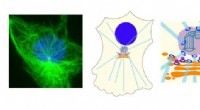
[Image of amoeba engulfing food]
Key Parts:
* Pseudopodia: The temporary projections used for movement and engulfing food.
* Food Vacuole: The sealed sphere containing the engulfed food.
* Cytoplasm: The jelly-like substance that fills the amoeba.
* Cell Membrane: The outer boundary of the amoeba.
* Nucleus: The control center of the amoeba.
Note: The process of phagocytosis is a vital part of amoeba survival. It allows them to obtain essential nutrients and energy for growth and reproduction. This mechanism is also observed in other types of cells, including white blood cells in our bodies.