Light Microscopy:
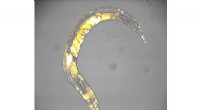
* Bright-field microscopy: The most basic type, good for general observation of cells and their basic structures. It's cheap and easy to use.
* Phase-contrast microscopy: Enhances contrast in transparent cells, allowing you to see internal structures without staining.
* Differential interference contrast (DIC) microscopy: Similar to phase contrast, but provides a more three-dimensional image.
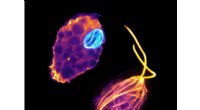
* Fluorescence microscopy: Uses fluorescent dyes to label specific cellular components, giving you a highly specific view of those structures. This technique is very powerful for studying cellular processes.
* Confocal microscopy: A type of fluorescence microscopy that uses lasers to scan a specimen, producing detailed images of individual slices. This is useful for studying the 3D structure of cells and tissues.
Electron Microscopy:
* Transmission electron microscopy (TEM): Provides the highest resolution images of cells, allowing you to see the ultrastructure of organelles. It's used for studying the internal details of cells.
* Scanning electron microscopy (SEM): Provides 3D images of the surface of cells and tissues. It's useful for studying cell shapes and surface features.
Other Techniques:
* Atomic force microscopy (AFM): Can image individual molecules on the surface of cells, providing even higher resolution than electron microscopy.
* Super-resolution microscopy: A recent development that uses advanced techniques to push the limits of light microscopy resolution, allowing you to visualize very small structures within cells.
Choosing the Right Tool:
* Resolution: How much detail do you need to see?
* Sample type: Are you looking at live or fixed cells?
* Specific structures of interest: Do you want to see specific organelles or proteins?
* Budget: Some techniques are more expensive than others.
Ultimately, the best tool is the one that provides the most useful information for your specific research question.