Core Principles:
* Cell Theory: All living organisms are composed of one or more cells, and all cells arise from pre-existing cells.
* Gene Theory: Traits are passed from parents to offspring through genes, which are units of heredity located on chromosomes.
* Evolutionary Theory: Living organisms have changed over time through descent with modification, driven by natural selection.
* Homeostasis: Living organisms maintain a stable internal environment, despite external changes.
* Energy Flow: Energy flows through living systems, from producers to consumers and decomposers.
Specific Areas:
* Genetics:
* Mendel's Laws of Inheritance: Explains how traits are passed down from parents to offspring, including the principles of segregation and independent assortment.
* Molecular Genetics: Studies the structure and function of genes at the molecular level.
* Ecology:
* Population Dynamics: Studies how populations of organisms grow, change, and interact with their environment.
* Community Ecology: Explores interactions between different species within an ecosystem.
* Physiology:
* Organ System Function: Explores how different organ systems within an organism work together to maintain life.
* Neurobiology: Studies the nervous system, including how it processes information and controls behavior.
* Development:
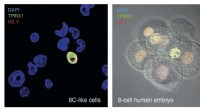
* Embryology: Examines the stages of development from fertilized egg to fully formed organism.
* Evolutionary Developmental Biology (Evo-Devo): Investigates how developmental processes have changed over evolutionary time.
Additional Theories:
* Endosymbiotic Theory: Explains the origin of eukaryotic cells (cells with a nucleus) from a symbiotic relationship between prokaryotic cells.
* Theory of Plate Tectonics: Explains the movement of Earth's continents and its impact on evolution and biodiversity.
* Gaia Hypothesis: Posits that Earth is a self-regulating system where living organisms and their environment are interconnected.
Important Notes:
* Scientific Theories are Supported by Evidence: Theories in biology are not just guesses, but well-supported explanations based on extensive experimental data and observations.
* Theories Can Change: Scientific theories are constantly being refined and updated as new evidence is gathered.
* Understanding Basic Theories is Key: These fundamental theories provide a framework for understanding the complexity of life and how living organisms function and interact with their environment.
I hope this overview is helpful! Please let me know if you would like to explore any of these theories in more detail.