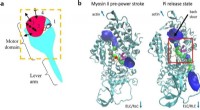
* Specificity: Enzymes are highly specific, meaning they catalyze only certain reactions with particular substrates. This specificity arises from the unique shape of the enzyme's active site, which is a small region on the enzyme's surface that binds to the substrate. The active site is formed by the specific arrangement of amino acids, the building blocks of proteins.
* Catalytic Activity: The active site of an enzyme is designed to interact with the substrate in a way that lowers the activation energy of the reaction, thereby speeding it up. This interaction involves specific chemical bonds and interactions between amino acid residues in the active site and the substrate molecule.
* Flexibility and Conformation: Proteins have a high degree of flexibility, allowing them to change shape slightly in response to environmental changes. This flexibility is essential for enzymes to bind to their substrates, facilitate the chemical reaction, and then release the products.
While there are some exceptions, like ribozymes (catalytic RNA molecules), proteins are the primary class of molecules that function as enzymes. This is due to the versatility and complexity of protein structures, allowing for a wide range of catalytic activities and specificities.
Here's a simple analogy: Imagine a lock and key. The lock represents the active site of an enzyme, and the key represents the substrate. The specific shape of the key (substrate) fits perfectly into the lock (active site), enabling the "reaction" to occur (the key entering the lock).
Proteins are ideal for this role due to their ability to fold into intricate and highly specific three-dimensional shapes.