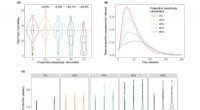
* Colony size is variable: The size of a colony depends on many factors, such as:
* The type of microorganism: Some bacteria grow quickly and form large colonies, while others are slow-growing and produce smaller colonies.
* Nutrient availability: A rich medium will support larger colonies than a nutrient-poor one.
* Incubation time: Longer incubation periods will allow colonies to grow larger.
* Competition: Overcrowding can limit colony size.
* Colony number reflects population size: Each colony represents a single microbe that has multiplied into a visible cluster. Counting colonies provides a more reliable estimate of the original number of microbes present in the sample.
How Colony Counts are Used:
* Quantifying contamination: By counting colonies on a growth medium, we can determine the number of viable microbes present in a sample. This is important for assessing the level of contamination in food, water, medical supplies, etc.
* Comparing effectiveness of treatments: Antibiotics, disinfectants, and other treatments are evaluated based on their ability to reduce colony counts.
Exceptions:
There are some instances where colony size might be considered:
* Microscopy: In some situations, the size and morphology (shape) of individual microbial cells can be used for identification.
* Specific applications: In certain research areas, colony size might be relevant, but it's not the primary measure of contamination.
In summary, counting colonies is a more reliable way to assess contamination levels because it reflects the initial number of viable microorganisms in a sample, while colony size is too variable and influenced by many external factors.