* It is a self-contained unit: This means it can carry out all the essential functions of life independently, such as metabolism, growth, reproduction, and response to stimuli.
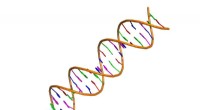
* It has its own genetic material (DNA): This allows the cell to direct its own development and activities.
* It is capable of independent survival: It can obtain nutrients, eliminate waste, and reproduce without relying on other cells.
Examples of single-celled organisms include:
* Bacteria: These are prokaryotes, meaning they lack a nucleus and other membrane-bound organelles.
* Archaea: These are also prokaryotes and are often found in extreme environments.
* Protozoa: These are eukaryotes, meaning they have a nucleus and other membrane-bound organelles. They are more complex than bacteria and archaea.
* Algae: These are photosynthetic eukaryotes, meaning they can produce their own food. Some algae are single-celled, while others form multicellular colonies.
It's important to note that:
* Viruses are not considered organisms: They are not capable of independent survival and require a host cell to reproduce.
* Some organisms are multicellular: They are composed of many cells that work together to carry out the functions of life.
So, a single cell can be called an organism if it meets the criteria of self-containment, genetic independence, and independent survival.