For trapping:
* Sticky substances: Some plants, like sundews and butterworts, have sticky glands on their leaves that trap insects. These glands produce a viscous, sticky liquid that holds the insect in place.
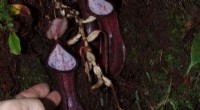
* Pitfall traps: Plants like pitcher plants have modified leaves that form deep, slippery pits. The inside of the pit is coated with a waxy substance and often contains digestive fluids, making it difficult for insects to climb out.
* Snap traps: Venus flytraps have hinged leaves that snap shut quickly when triggered by an insect. The edges of the leaves have teeth that interlock, preventing the insect from escaping.
For digestion:
* Enzymes: Carnivorous plants produce digestive enzymes, such as proteases, that break down the proteins in the insects' bodies. These enzymes are released into the trap or pitcher, dissolving the insect's soft tissues.
* Acids: Some plants, like pitcher plants, also secrete acids to help with digestion. These acids lower the pH of the trap, further breaking down the insect's body.
It's important to note that insect-eating plants are not actively hunting their prey. They are passive carnivores, relying on their traps and digestive mechanisms to catch and break down insects. They still need sunlight and water for photosynthesis, and insects provide them with supplementary nutrients, especially nitrogen, which is often scarce in their environment.