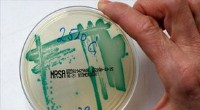
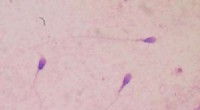
* Organisms without organ systems: These are primarily single-celled organisms, like bacteria, archaea, and protists. They lack the complexity to form specialized tissues and organs. Instead, they rely on their single cell to perform all necessary life functions.
* How they survive without organ systems:
* Cellular processes: These single-celled organisms use their cell membrane, cytoplasm, and various organelles to carry out processes like respiration, digestion, excretion, and reproduction.
* Direct exchange: They can directly exchange materials with their environment (e.g., oxygen, nutrients, waste) because of their small size and large surface area-to-volume ratio.
Example: Imagine a simple bacterium. It doesn't have a circulatory system, a digestive tract, or a nervous system. Instead, it relies on its cell membrane to control what enters and exits, uses internal organelles for metabolism, and responds to changes in its environment through simple mechanisms.
Key takeaways:
* Simplicity is key: Organisms that are simple in structure and small in size can function effectively without organ systems.
* Adaptation and evolution: The evolution of organ systems in more complex organisms is an adaptation that allows for greater specialization and efficient functioning in a larger and more complex environment.
So, while organ systems are incredibly important for complex life, single-celled organisms have found other ways to thrive without them, showcasing the amazing diversity of life on Earth.