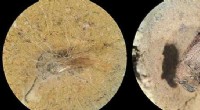
1. Cellular Organization:
* Bacteria: Are single-celled organisms, meaning they consist of a single, self-contained unit.
* Cells: Are the basic building blocks of all living organisms, including plants, animals, and fungi.
* Other living organisms: Can be multicellular, composed of many cells working together, or unicellular, like bacteria.
2. Metabolism:
* Bacteria, cells, and other living organisms: All require energy to perform essential functions. They obtain this energy through metabolic processes, converting nutrients into usable forms.
3. Reproduction:
* Bacteria: Reproduce asexually, typically through binary fission, where one cell divides into two identical daughter cells.
* Cells: Can reproduce through mitosis (for somatic cells) or meiosis (for germ cells).
* Other living organisms: Employ various reproductive strategies, including sexual and asexual reproduction.
4. Heredity:
* Bacteria, cells, and other living organisms: All possess genetic material (DNA) that carries instructions for their structure, function, and development. This genetic material is passed on to offspring, ensuring continuity of life.
5. Growth and Development:
* Bacteria: Grow and divide, increasing their numbers.
* Cells: Grow and differentiate, specializing in specific functions.
* Other living organisms: Exhibit complex patterns of growth and development, from embryonic stages to maturity.
6. Response to Stimuli:
* Bacteria, cells, and other living organisms: Can sense and respond to changes in their environment, such as temperature, light, and chemical signals.
7. Adaptation:
* Bacteria, cells, and other living organisms: Can evolve over time, adapting to changing environmental conditions. This adaptation is driven by genetic variation and natural selection.
In summary, while bacteria are prokaryotic organisms, they share fundamental characteristics with eukaryotic cells and other living organisms, highlighting their common ancestry and the unifying principles of life.