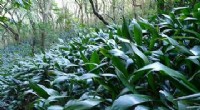
1. Sunlight: Flowering plants capture sunlight using a green pigment called chlorophyll found in their leaves.
2. Carbon Dioxide: They take in carbon dioxide from the air through tiny pores called stomata on their leaves.
3. Water: They absorb water and dissolved minerals from the soil through their roots.
4. Photosynthesis: Inside the leaves, the plant uses sunlight, carbon dioxide, and water in a chemical reaction to produce glucose (sugar). This glucose is the plant's food source.
5. Oxygen as a Byproduct: Photosynthesis also produces oxygen as a byproduct, which is released into the atmosphere.
In summary, flowering plants obtain food through the following process:
* Sunlight + Carbon Dioxide + Water = Glucose (food) + Oxygen
This process is essential for the survival of flowering plants and all other plant life, as well as for the overall balance of the Earth's atmosphere.