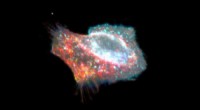
Here's a breakdown:
* Organelles are specialized structures within a cell that perform specific functions, similar to how organs work in a body.
* Each organelle contributes to the overall survival and operation of the cell by carrying out essential tasks.
Examples of organelles and their functions include:
* Nucleus: Contains the cell's genetic material (DNA) and controls cell activities.
* Mitochondria: Produce energy (ATP) through cellular respiration.
* Ribosomes: Synthesize proteins.
* Endoplasmic reticulum (ER): Modifies and transports proteins, synthesizes lipids.
* Golgi apparatus: Processes and packages proteins and lipids.
* Lysosomes: Break down waste materials and cellular debris.
* Vacuoles: Store water, nutrients, and waste products.
By working together, these organelles ensure that the cell can:
* Obtain nutrients: Take in food and water.
* Produce energy: Generate ATP to power cell activities.
* Synthesize molecules: Build proteins, lipids, and other necessary components.
* Remove waste: Eliminate waste products from cellular processes.
* Maintain homeostasis: Regulate internal conditions like temperature and pH.
* Reproduce: Create new cells through cell division.
Therefore, the organized structure and coordinated functions of organelles within a cell are crucial for its survival and the functioning of the entire organism.