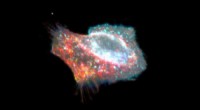
* Different structures within a single cell: While single-celled organisms don't have distinct organs or tissues, they do have specialized structures within their single cell. These structures, called organelles, are responsible for specific functions. For example, mitochondria are responsible for energy production, the nucleus contains genetic material, and the Golgi apparatus packages and transports molecules.
* Specialized functions: These organelles allow single-celled organisms to perform many complex functions essential for survival. They can move, sense their environment, reproduce, obtain nutrients, and eliminate waste, all within the confines of a single cell.
* Examples of specialization: Some single-celled organisms, like paramecia, have specialized structures like cilia for movement, while others, like amoebas, use pseudopods. Certain bacteria have specialized structures for photosynthesis.
Therefore, while single-celled organisms don't exhibit the same level of tissue-level specialization as multicellular organisms, they do have specialized structures and functions within their single cell.
It's also important to note that some single-celled organisms can form colonies. These colonies can exhibit a degree of specialization between individual cells, with some cells specializing in reproduction, others in nutrient gathering, and so on. This is a step towards the kind of specialization we see in multicellular organisms.