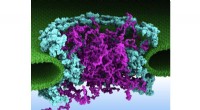
* All organs are made of cells, and cells have membranes. So, in a way, all organs have permeable membranes at the cellular level.
* Organs also have structures that act as barriers. These barriers can be selectively permeable, meaning they control what passes through.
So, there isn't a single organ that is *completely* impermeable. Here are some examples:
* Skin: Acts as a barrier, but allows for some gas exchange and absorption of certain substances.
* Lungs: Gas exchange occurs here, so they are permeable to oxygen and carbon dioxide.
* Intestines: Absorb nutrients, so they are permeable to food molecules.
* Brain: Has the blood-brain barrier, which is highly selective, but not completely impermeable.
Therefore, it's more accurate to say that certain parts of organs have varying degrees of permeability, depending on their function.