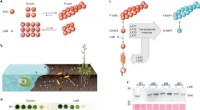
These enzymes act as a defense mechanism against invading viruses (bacteriophages). They recognize specific DNA sequences within the viral genome and cut the DNA, preventing the virus from replicating.
Here's a breakdown:
* Bacteria and Archaea: They are the primary source of restriction enzymes.
* Defense mechanism: They use these enzymes to protect themselves from viral infections.
* Specific DNA recognition: Each restriction enzyme has a specific recognition site on the DNA, which it cuts.
* Viral DNA destruction: By cutting the viral DNA, they prevent the virus from multiplying and infecting the host.
This ability of bacteria to cut DNA at specific sequences has been harnessed by scientists in various fields, including molecular biology, genetic engineering, and medicine.