Here's why:
* Amino Acids: These are the building blocks of proteins. They have a central carbon atom bonded to an amino group (NH2), a carboxyl group (COOH), a hydrogen atom, and a side chain (R group) that varies depending on the specific amino acid.
* Peptide Bond: Amino acids are linked together by peptide bonds. These bonds form between the carboxyl group of one amino acid and the amino group of the next.
* Polypeptide Chain: A chain of many amino acids linked together by peptide bonds is called a polypeptide chain. This chain represents the primary structure of a protein.
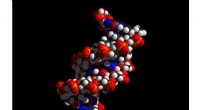
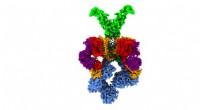
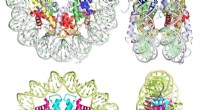
* Protein Structure: The polypeptide chain can fold and twist into specific three-dimensional shapes, forming the secondary, tertiary, and quaternary structures of a protein. These complex structures are crucial for the protein's function.
So, while "protein" is often used interchangeably with "polypeptide chain," it's important to remember that a polypeptide chain is the linear sequence of amino acids that forms the foundation of a protein.