Here's the breakdown:
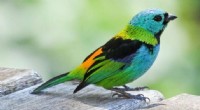
* Bursa of Fabricius: This organ is a specialized part of the bird's immune system, located in the cloaca (the common opening for the digestive, urinary, and reproductive systems).
* Discovery: In the 1960s, scientists found that B cells were responsible for humoral immunity in birds, meaning they produced antibodies that circulated in the bloodstream. They traced the origin of these cells to the bursa of Fabricius.
* Naming: Because of this discovery, the cells were named "B cells" to signify their origin.
While humans and other mammals don't have a bursa of Fabricius, the equivalent organ in mammals is the bone marrow. It's in the bone marrow where B cells are produced and mature in humans. However, the name "B cell" has stuck even though the origin is different in mammals.