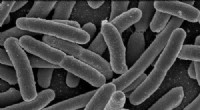
1. The Natural World: Scientists observe the physical universe around us, from the smallest particles to the largest galaxies. This includes:
* Physical Phenomena: Scientists observe changes in matter, energy, motion, and forces. They might study how objects fall, how light behaves, or how chemical reactions occur.
* Biological Systems: They observe organisms, their structures, functions, behaviors, and interactions with each other and their environment.
* Geological Features: They observe landforms, rocks, fossils, and the processes that shape the Earth.
* Astronomical Objects: They observe stars, planets, galaxies, and other celestial bodies.
2. Data and Experiments:
* Measurements: Scientists take measurements of physical quantities like temperature, mass, time, etc. They use instruments like thermometers, scales, and clocks.
* Experiments: Scientists design and conduct experiments to test hypotheses and collect data. They manipulate variables, control conditions, and observe the results.
* Data Analysis: Scientists analyze the data they collect using statistical methods and other techniques to draw conclusions and identify patterns.
3. Models and Theories:
* Existing Knowledge: Scientists observe how well existing models and theories explain observed phenomena. They look for inconsistencies or anomalies that might require adjustments to the models.
* New Observations: Scientists use new observations to refine existing models or develop entirely new ones.
4. Human Behavior and Society:
* Social Interactions: Some scientists observe human behavior, interactions, and social patterns.
* Economic Trends: Others observe economic data, trends, and systems.
* Cultural Phenomena: Some scientists study cultural practices, beliefs, and values.
Ultimately, scientists observe anything that helps them understand the world around them. They are constantly asking questions, seeking answers, and refining our knowledge through observation and experimentation.