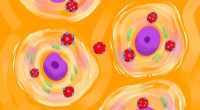
* First observations of single-celled organisms: Using his self-made microscopes, van Leeuwenhoek was the first to observe and describe tiny living organisms, like bacteria and protozoa. This discovery, in the late 1600s, was crucial because it showed that life exists at a scale far smaller than what could be seen with the naked eye. This was a revolutionary concept at the time.
* Challenging the idea of spontaneous generation: His observations also contributed to the eventual debunking of the theory of spontaneous generation, which claimed that living organisms could arise from non-living matter. His findings, showing the existence of tiny, previously unseen life forms, suggested that life could only come from other living things.
While van Leeuwenhoek didn't formulate the cell theory himself, his discoveries laid the crucial groundwork for it. His observations of single-celled organisms provided the first evidence that all living things are composed of cells, which was a key foundation for the theory that was later developed by Schleiden, Schwann, and Virchow.
In summary, van Leeuwenhoek's contributions were:
* Discovering a whole new microscopic world of life.
* Providing the first glimpses of cells, paving the way for future discoveries.
* Challenging pre-existing ideas about the origins of life.
Without his pioneering work, the cell theory would have taken much longer to develop.