Here's a breakdown:
* Chloroplast: The organelle in plant cells responsible for photosynthesis.
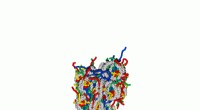
* Thylakoids: Flattened, sac-like structures within the chloroplast that are arranged in stacks called grana.
* Grana: The stacks of thylakoids.
* Lumen: The space inside a thylakoid.
* Stroma: The fluid-filled space surrounding the thylakoids, similar to the cytoplasm of a cell.
Why are thylakoids important?
The thylakoid membrane contains the chlorophyll and other pigments that capture light energy for photosynthesis. The process of photosynthesis takes place in two stages:
1. Light-dependent reactions: Occur within the thylakoid membrane, where light energy is converted into chemical energy in the form of ATP and NADPH.
2. Light-independent reactions (Calvin cycle): Occur in the stroma, where carbon dioxide is converted into glucose using the energy from ATP and NADPH.