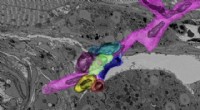
* Visibility: Cell walls are incredibly small, typically measuring only a few nanometers to a few micrometers thick. Without microscopes, they would be completely invisible to the naked eye.
* Structure: Microscopes allow us to see the intricate structure of cell walls. This includes:
* Layers: We can distinguish between the different layers of the cell wall, such as the primary and secondary cell walls in plants.
* Pore structure: The presence and arrangement of pores, which allow for communication between cells.
* Fibrils: The arrangement of cellulose microfibrils, which provide strength and rigidity to the wall.
* Composition: Different types of microscopes can help us analyze the chemical composition of the cell wall:
* Light microscopy: Used for basic observations of structure and staining techniques to highlight specific components.
* Electron microscopy (TEM & SEM): Provides ultra-high resolution, allowing detailed analysis of cell wall structure and even the arrangement of molecules.
* Function: By studying the structure of the cell wall, we can learn about its function:
* Support and shape: The cell wall provides structural support and determines the shape of the cell.
* Protection: It protects the cell from mechanical damage and osmotic stress.
* Regulation: It controls the movement of molecules in and out of the cell.
* Communication: Pores allow for communication and exchange of materials between cells.
Without the development of microscopes, our understanding of cell walls would be extremely limited. This technology has been instrumental in unlocking the secrets of these vital structures and their crucial roles in life.