Here's a breakdown:
* Phototaxis: This refers to an organism's movement in response to light. It can be positive (towards light) or negative (away from light).
* Startle Response: Many animals have a startle response, which is a sudden, involuntary movement in reaction to a perceived threat. Bright light could trigger this in some cases.
Examples:
* Plankton: Some plankton species exhibit positive phototaxis, moving towards light sources. This is often observed in the surface waters of the ocean.
* Moths: Moths are known for their positive phototaxis, which can lead them to fly towards artificial light sources.
* Cockroaches: Cockroaches, while not jumping, will often scurry away in response to sudden changes in light.
* Flies: Flies are known to have a startle response, which can lead them to jump away from sudden light changes.
To find a specific organism that jumps due to light, you would need to look at its specific behavioral patterns and physiology. For example:
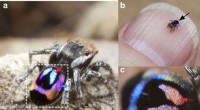
* Jumping spiders: These spiders are known for their excellent eyesight and hunting techniques. While they may not jump solely due to light, their jumping behavior could be triggered by a perceived prey or threat, which could be influenced by light changes.
It's important to remember that animal behavior is complex and influenced by multiple factors. While some organisms might react to bright light with a jump, it's not a universal reaction.